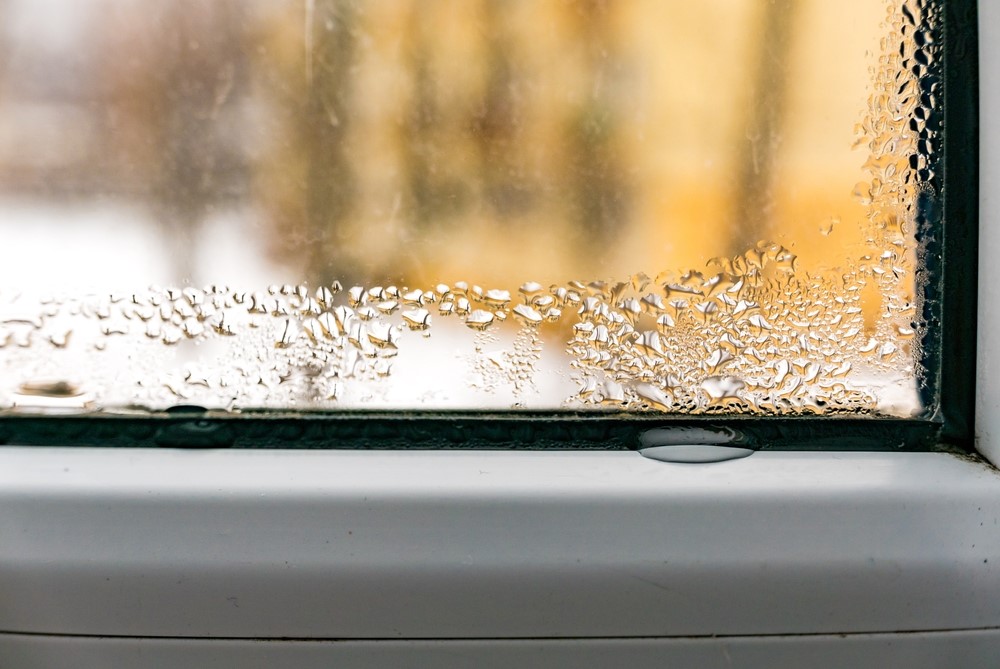
Seeing condensation on your windows can be concerning, especially after installing new, energy-efficient windows. In many cases, however, condensation is not a sign that something is wrong with the window itself.
Understanding why condensation happens, how indoor humidity affects your windows, and what you can do to control excess moisture can help protect your windows and your home.
What Causes Window Condensation?
Condensation is excess moisture that collects on cooler surfaces from water vapor in the air. It is the same process that causes water droplets to form on a cold drink during the summer or on your car in the morning.
When warm, moisture-filled air comes into contact with a cooler surface, the air may no longer be able to hold all of that moisture. The excess moisture then condenses on the surface.
Understanding Humidity
Humidity refers to the amount of water vapor or moisture in the air. All air contains some level of moisture, and warm air can generally hold more moisture than cold air.
Relative humidity describes the percentage of moisture currently being held in the air at a specific temperature.
You can monitor the humidity inside your home using devices such as a hygrometer or thermostat with humidity monitoring.
Why Do My New Windows Have Condensation?
If you recently replaced older windows and have started noticing condensation, it does not necessarily mean there is a problem with your new windows.
Older windows may have allowed moisture to escape through gaps and air leakage. Newer, better-insulated and energy-efficient windows are more airtight, which means less indoor humidity can escape naturally.
As a result, condensation may become more noticeable when indoor humidity levels are high or when there is a significant difference between indoor and outdoor temperatures.
Summer Window Condensation
During warmer months, air conditioning lowers the temperature inside your home and cools the glass surface of your windows.
Condensation can occur when the glass becomes colder than the outdoor air and reaches the dew point.
Ways to help reduce summer condensation may include:
- Raising your thermostat setting slightly
- Using exterior shutters
- Providing exterior shade from trees or other sources
These steps can help increase the surface temperature of the window and reduce the likelihood of condensation forming.
Winter Window Condensation
Window condensation can also occur during cold weather.
Winter condensation may develop when the glass surface is colder than the temperature and relative humidity of the indoor air.
For example, when the outdoor temperature is 30°F and the indoor temperature is 70°F, condensation may begin to form on a double-pane energy-efficient window when indoor relative humidity rises above approximately 58%.
Condensation Levels by Glass Type
At an outside temperature of approximately 30°F:
Glass Type | Potential Condensation Level |
|---|---|
Single Pane | Above 32% relative humidity |
Double Pane | Above 58% relative humidity |
Triple Pane | Above 72% relative humidity |
These figures provide a general comparison of how different glass configurations may respond to indoor humidity.
Recommended Winter Humidity Levels
As outside temperatures decrease, lowering indoor relative humidity can help reduce the risk of condensation.
Outside Temperature | Suggested Indoor Relative Humidity |
|---|---|
-20°F or Below | Not over 15% |
-20°F to -10°F | Not over 20% |
-10°F to 0°F | Not over 25% |
0°F to 10°F | Not over 30% |
10°F to 20°F | Not over 35% |
20°F to 40°F | Not over 40% |
Condensation on Bay and Bow Windows
Bay and bow windows may experience more condensation than some other window styles.
Because these windows project outward from the insulated wall of the home, interior air circulation may be more restricted and the window surfaces may remain cooler.
Completely enclosing bay or bow windows with blinds or drapes can also contribute to moisture buildup. If left uncontrolled, that moisture may damage wood components around the window.
How to Reduce Window Condensation
The most effective way to help control condensation is to reduce excess indoor moisture and improve ventilation throughout your home.
Try the following:
- Use exhaust fans in kitchens, bathrooms, and laundry rooms.
- Vent gas burners and clothes dryers outside.
- Turn off humidifying devices when indoor humidity is too high.
- Open fireplace dampers and attic, basement, or crawl-space ventilation louvers when appropriate.
- Use ceiling fans to improve air circulation.
- Air out your home when conditions allow.
- Open blinds or drapes to improve airflow around windows during winter.
- Increase airflow across window surfaces.
- Raise the indoor temperature when necessary during cold weather.
Why Managing Indoor Humidity Matters
While some condensation can be normal, persistent moisture buildup should not be ignored.
Excess moisture can contribute to:
- Mold growth
- Water damage
- Rot on untreated wood
- Damage to windows and surrounding materials
The document recommends maintaining indoor humidity between approximately 30% and 50% to help reduce the likelihood of moisture-related issues.
Have Questions About Your Windows?
If you're noticing condensation on your windows or have questions about the performance of your new windows, our team is here to help.
Call our team or fill out a form on our website to speak with a window professional and get the answers you need.